
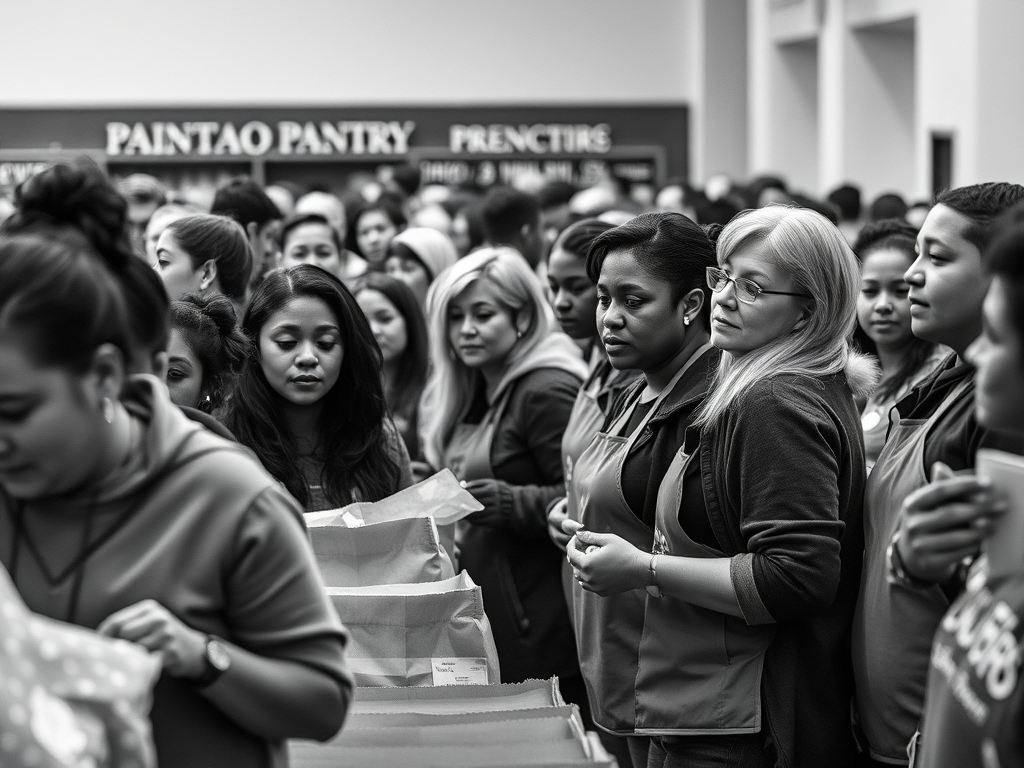
Since retirement, I have shifted from leading a wonderful congregation in suburban Birmingham, Alabama to working with partner organizations to provide food pantries in schools and communities, buy beds for children who slept on pallets, or shared a bed with a sibling, fund programs that deliver food, and build up people in vulnerable communities with great ideas.
Our organization, the Alabama Coalition for Healthy Mothers and Children, also works to find and support maternal and child health. The struggle to feed your family and pay for health care are among the most challenging in the state, but certainly not limited to there. It’s on everyone’s mind at the moment. We have kept going through some generous, and mostly anonymous to the public, givers.
We are launching a three year program, OPERATION DAILY BREAD, to support food and healthcare access in the Black Belt region and other places where people need a little help to help themselves. We launched a campaign in October to fund our efforts beginning in January. The response has been nothing short of amazing.
At the moment that I am releasing this podcast, we have received $83,000 in two short months. We have only $17,000 to go in , and I am ecstatic with appreciation for everyone who has given. Many of the people who gave, I know—and I know that their giving was sacrificial—and these are uncertain times. A month ago, a new friend out in California offered an extraordinary act of giving—for every dollar raised, she would match it with another dollar.
After that inspiration, through the intervention of one of our board advocates, Dr. Brandon Renfroe,the Mark Cuban Foundation gave us an inspirational gift of $10,000. When that happened, I was curious to learn more about Mr. Cuban, who I knew about through his sports ownership of the Dallas Mavericks and the Shark Tank show. I was amazed to learn not only about his business successes, but also his generosity through his foundation.
In the verbal class wars, framed in these days mostly among our politicians, armchair commentators, and podcasters, it is important to ask not so much whose fault the problems are as who is responsible for fixing the problems. I think it was Will Rogers who said of Herbert Hoover, who had the misfortune to preside over the Great Depression and in many ways make it worse, that Mr. Hoover’s advocacy of trickle-down economics would lift the country out of the doldroms. If the rich get richer, the logic goes, then what they do will generate wealth and jobs that will trickle down to everyone else. And like all ideas, to some extent, there’s truth there. But Rogers wryly observed, everybody knows that if you gave everything in the world to poor folks, by the end of the day, the rich would have it back again. Because their talent is understanding how wealth works and how to get it and keep it. But at least, said will, it would have passed through the poor guy’s hands on the way.
We have a tendency to think about all things economic in terms of competition and winning and losing. But ultimately all things that ultimately matter most are mattes of values that originate in the human heart—a moral sense of right and wrong, justice, fairness, and generosity of spirit, empathy, compassion. It isn’t enough to analyze problems and fix blame for how we got there. It is the determination to do something about it and how we come together to get it done that enables us to live together in peace.
As long as everything is about who’s winning and who’s losing, we will have ruthless competition between people. When the conversation is about love and justice, about my spiritual maturity and the well-being of our community, and love of neighbor, then it will be different.
Healthcare access is often discussed as an affordability problem, but it is a also a moral problem. If my neighbor is sick, it can be easily demonstrated that it is in my best interest economically to help him or her get well because it costs much more if the problem gets worse. But there are many complicating factors. You have to have a guideline, something that stirs how you’re going to come to the conversation. And it will either begin with, “How can I protect what is mine against what everybody else is trying to take away from me?” or “How can we together figure out the answer so that everyone at least has a shot at a good life?” And even more, “what is my responsibility to help fix it?” I don’t hear enough about that in our public conversations, but I see people every day who live that way—they volunteer at foodbanks, donate to causes, advocate for someone besides themselves, and businesses that support their community.
I want to add one more thought about the larger frame of this moment. In the raised voices and virtual world of so-called influencers, I don’t hear much about what our children will take from our public behavior about how we ought to live. What are they watching?
Did you hear the one about the little boy who was in church one Sunday? His mother handed him a five dollar bill to put in the collection plate. But when the offering plate passed by, he held his five dollar bill and put it in his pocket. Fortunately for him, his mother didn’t see him.
At the end of the service, he went to shake the pastor’s hand and pulled out the five dollar bill and gave it to the pastor. The pastor was surprised and pleased, for he had happened to notice the little boy pulling his offering back. He thought, “He must have wanted to hand it to me personally. How sweet.”
He took the bill and said, “Thank you. But why are you giving me this money? Why didn’t you put it in the offering plate?” And the boy answered, “Because I felt sorry for you. My mom told me you’re the poorest preacher we’ve ever had!”
If we don’t stop thinking about getting wealth without thinking about how we get it, what we do with it, and what we are teaching our next generation, we’ll never find our way through.
We want our children to learn the right messages from us. There is no more miserable way to live than to clutch onto our lives in desperation—whether in the area of finances or time or friendship. Jesus was so right—those who try to “save” their lives lose them, and those who give them away for His sake save them.
I am so grateful for those give generously and accept their responsibility to serve and sacrifice as a way of life. It’s the right example and message to send to our children.
Here are some ways to model the right values children need to see in the rest of us.
- Acknowledge each other—thank you’s, appreciation, and affection are as related to generosity as money and time.
- Model generosity, kindness and sharing in front of the children. They cannot learn what they do not see. This also applies to hard to see things like being fair in family resources, time, and work. Sharing is not just about giving to people in need—it is a spirit that should pervade all our relationships.
- Practice financial responsibility and generosity in our money and teach it to children
- Pursue spiritual maturity and surrender of the self in your own life. This will change the dynamics of the whole family.
- Practice generosity in all areas of life, not just money—time, talents, attention, emotional energy.
Someone is always watching, aren’t they? Be sure the message you are sending is clear! I’m grateful for people like Brandon Renfroe, Mr. Cuban and others who model something else. And I have known many people through the years, people of means who shared what they had for the good of others. I am grateful for everyone who gives to our organization, but I am just as glad for people who give to other groups, their faith groups, and who advocate for a better life for someone besides themselves.
At the end of it all, friends, family, your faith, and the legacy you leave is about all there is to it on this earth. Ask teachers and mothers and fathers, and grandparents. All these rest is just what you leave for somebody else to spend.
For more about the ACHMC’s work:
- ‘Mark Cuban gift doubles Alabama coalition’s work to fight child hunger in the Black Belt Yellowhammer, November 26, 2025
- Don’t forget the Little Ones’: Sumter County launches bed program for students in need Yellowhammer, July 29, 2025
- More than academics: This rural Alabama school district is making sure kids have beds AL.com, July 25, 2025
 The Flatpickin' Pilgrim's Progress