
My children asked the question, “Have you ever doubted your faith?” This is what I wrote. I hope it reassures you to know that the answer is simple: Yes, of course.
In some ways, the question itself could open so many different directions. Is the question, “Have I ever doubted whether I have faith?” Yes. Many times. Have I ever had questions that threatened to undo my sense of belief, everything I had trusted in my life? Yes, those are more about the subjective experience of faith.
Sometimes it could be taken to mean, “Have you ever doubted the faith?” That is, doubted the veracity of the Christian story or the entire Christian enterprise to which I’ve given my life. Again, the answer is many times, I have wobbled and even felt despair.
It may surprise you to know this is quite common. Among every writing by the most important and influential Christian thinkers and theologians and leaders, there are stories and journals of paralyzing doubts and fears. It’s part of the whole journey to spiritual maturity.
When I was a freshman in college, we read a book in my first religion class by the great church historian Martin Marty called Varieties of Unbelief. He wrote that doubt sits in the middle of the line that connects faith on one end and unbelief on the other. He described unbelief as the intentional and self-conscious rejection of God—willful, intentional, and resolved.
So, a person can be an unbeliever. But that is not the same thing as having doubt. It is a much stronger stance than doubt.
Doubt is simply uncertainty. Doubt can be a feeling state, or an emotion, or a sense of not being sure about something, like a boat that is disconnected from the dock and floating free.
Doubt can also be a methodological undertaking in which one intentionally questions everything to get to the bottom of things, as a friend of mine has put it. That is a different kind of doubt. So, Dr. Marty put faith over on one side—standing in trust in something, confidence in it or certitude, which is not the same thing, is absolute certainty.
And then on the other side you have unbelief, in which someone has decided, overtly, that they really know that the universe has no meaning, that it is absent of a God, that religion itself is false. And they are convinced that they can prove this to anyone who bothers to think like they do.
In many ways, it is as extraordinary a claim as that there is a God–how could one know that without doubt? But right in the middle of that sits doubt and it can either face toward unbelief or toward faith. There is a kind of doubt that is like the man in the gospels who says Lord, I believe–help thou my unbelief.
And there is a kind of doubt that is a cynicism that kind of keeps going on down. So that’s the best way that I have thought about it. Sometimes my doubts and questions have to do with what I see in the big picture or perhaps a long period of going through struggles and hardships. Sometimes it might turn out to be more about myself than about the actual truth. So, it is important not so much to figure out how to stop doubting or push it away but to see where it can lead us, to places of greater assurance.
I always try to explore my doubts to be sure they are not either arrogant confidence in my own self-confidence or profound doubts about myself. Both can be deadly. A counselor once told me that addicts swing wildly between reckless and impulsive egotism and toxic shame. Deadly paths, both.
But I think it’s important to separate our subjective experiences from finding answers about the ultimate truth of things. And so it is possible, it is likely, that all of us will have these experiences. And it says, very little about whether you have ultimate trust in something.
Now I have spoken about the negative dimensions of doubt when it is facing towards unbelief. This is more a stubborn willfulness that is determined to find reasons not to trust in something. Even in the most elemental parts of life, human beings struggle to affirm life as gift and positive or to descend into cynicism and abandonment of hope. Does life mean something or not?
But what does it mean to face in the other direction? And here I would point to the important work of doubt as a tool of genuine faith. Its purpose is to discern between the real thing and those shallow substitutes and counterfeits of the authentic. While they wrap themselves in the language, actions, and representations of faith, they are in fact something else.
We see this everywhere in this current moment. Where there is religion laced with super patriotism, cultural anxiety, conspiracy theories, or worse, the base sins of greed, power and selfishness, doubt is necessary. The Abrahamic religions generally agree that there are alternatives called idolatry. Idolatry is simply this: to elevate something less than the ultimate truth, that is not God, into the place of God.
The spiritual quest is about seeking and following Truth. Distinguishing faith from that which is not true faith is a lifelong and arduous quest. This is the core of the three temptations Jesus faced in his desert faceoff with Satan—not to choose obvious sin for what is right, but to compromise the will of God for an empty substitute.
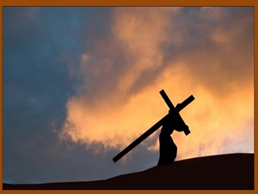
Nowhere is this more obvious currently than in the so-called culture wars in American politics, where moral and spiritual truth is distorted to serve the shallowness of power politics and control. These fake religious versions must be rejected, and only a faithful doubt can help us.
To have faith or to live by faith is to trust in something, to continue to do the practices of a way of life, not to have the universe figured out. So, people who continue to pray, worship, love others and do the commands of love and mercy, to read and wrestle with scripture and intellectual work, in fact have a kind of faith regardless of their certainty at any given moment.
Therefore, you either have a faith that lives with questions or one that must insist that all questions have been answered. Given the latter, I would reject faith, but I don’t think that’s what faith is. Faith will have to have doubt to make its way through the immensity of human suffering and the questions of life—the unfairness and injustice of life, the hardships that people go through, cruelty and hypocrisy and the great shadow of what death means and why.
I went back after I got this question and looked through all my sermons and writings to see what I had said about faith and doubt and it seems that over and over again that I was implicitly saying to people, “This is real and part of the journey and of course, you will have doubts.” That does not mean you do not have faith.
I have spent a lifetime wrestling, arguing, questioning. It was the entire method of my education for twelve years to prepare. It weaves through what I taught and preached.
In one sermon I wrote this in recent years,
What is the alternative? It is to have faith. Faith is not certainty about everything. People of faith have questions, lots of them. Martin Luther, the Reformer, had times when he doubted his whole life’s work. But at those times, everything broke down—his confidence in God, his sense of forgiveness, all of it. But still he persisted, with what Paul Tillich called, “The courage to be.”
This “courage” is the courage to affirm oneself despite our doubt. Even in the presence of your own failures, your own despair, your questions, and darkness, to hold onto that sense that there is a thread of purpose weaving through all of this.
That is the greatest concern of my life. And up off the thoughts. There is not a day that goes by that. I don’t think about God, even if I’m arguing with God, even if I’m disappointed with God, even if I am having doubts about God.
But let me be specific. I can think of several times when I had run off my spiritual road. My teenage years were pervaded by questions, doubts, uncertainty. My junior year was the time of my experience of call to ministry, but it was the culmination of a year of inner turmoil and searching. Another time was my senior year in high school when a new pastor tore my church to shreds with authoritarian religion and sent me off to high school disillusioned. The second time was after my education, when in my next church, I encountered a world unlike anything I had known before. And at the end of that time, exhausted, I went through a two-year program in spirituality, seeking a firmer place to stand.
Those times were much like a trapeze acrobat, slung out into midair, not yet grasped by the other acrobat they spin towards. For a moment, you don’t think anyone or anything will be there. But there always seems to be. In each of these cases, a long time of self-doubt and wilderness (not always known outwardly), eventually opened up a powerful new time. This pattern of “unmaking” and remaking is something I keep learning. Doubt is a reality. And a gift. Let it serve your quest for the highest and best that is to be
 The Flatpickin' Pilgrim's Progress
YES!
Peace, LaMon
LikeLike