
How we read it determines what we see, no? Part one of a four part series
This article arose originally from a writing assignment from the Women’s Missionary Union of the Southern Baptist Convention. It is more than an irony for me that this assignment came even as Baptists were still reconciling their own painful history with slavery in the 19th century. As an ardent mission-sending organization, it is nonetheless a continuous wonder that the SBC was birthed out of a split in American Baptists of the Triennial Convention when a slaveholding Southerner was put forward to become a missionary overseas and refused. This led to the formation of the Convention as a breakaway group in 1845 amid the boiling debate over the slavery issue. The Bible, then and now, continues to be used as justification as well as opposition to acceptance of others into fellowship and welcome. My argument, written for lay leaders in local churches, was to demonstrate that the Bible, rightly interpreted, makes a powerful case for the universal implications of the Kingdom of God for all. That this is disputed says less about scripture and more about its interpretive communities. Reprinted and revised here with permission.
When I went to seminary, my wife found a job as head resident at a women’s dorm at Campbell University. As a “dorm mother” she found herself taking care of nearly 100 young women. Many were from the South, but many also came from other regions of the United States. We also had students from other lands, including several Muslim students from Jordan, Iran, and Egypt.
Living together in a dorm forced us to get along with each other for a common purpose. These young women found that they had to learn how to respect the concerns of others, even if it meant to simply leave someone else alone when we did not understand why they did what they did.
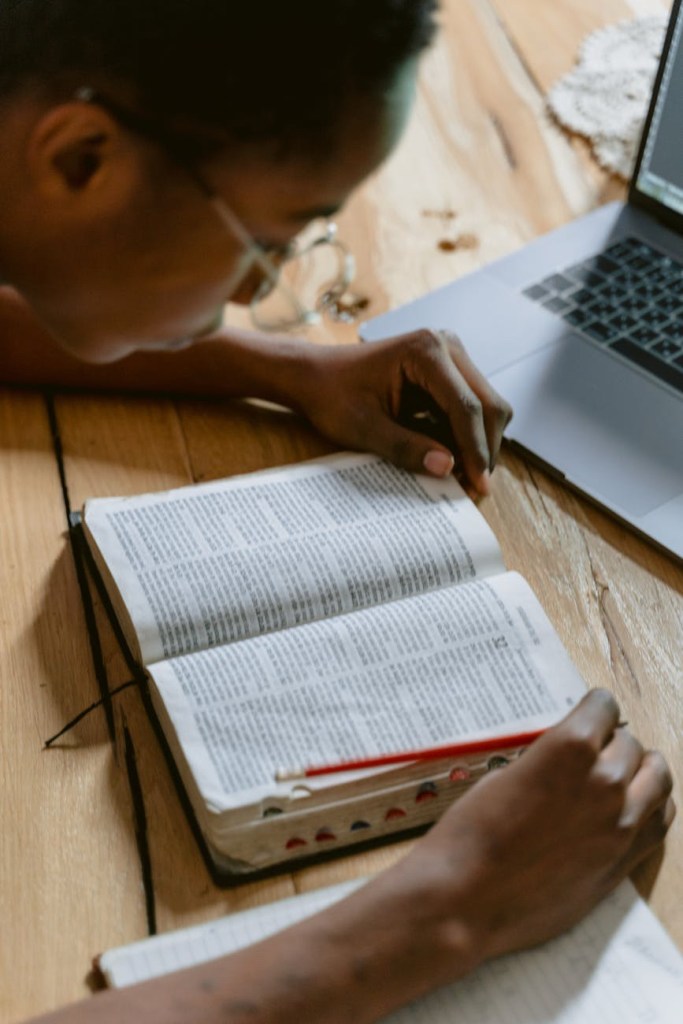
We were often surprised by how little we knew about one another, how wrong we were about other cultures, and how many stereotypes we carried in our minds toward them. As we allowed ourselves their friendship, had them into our apartment for meals, involved ourselves with their lives and concerns, we found ourselves being surprised once more–we learned to love them.
I always carried a theoretical openness to people from other cultures because of my commitment to the Christian faith. I had been encouraged to love others since childhood by the missions education programs I had attended. At the same time, I had heard the mixed messages of our culture and media which caused suspicion, misunderstanding and presumption. Sometimes people who taught us the Bible’s message of universal grace could be overheard speaking overtly racist anger towards the Civil Rights movement of the Sixties when I was growing up.
It’s an irony, isn’t it? The less contact we have with others, the more likely we are to mistrust them, dislike them or even to hate them. Of course, the opposite can also happen—more contact, more awareness of difference, can kick in our primal fears. Our assumptions are called into question, our security about the “way things are” can be shattered. Add to that our current toxic politics and media hype, amplified by ignorant extremists on social media.
It is hard to read the four Gospels and the book of Acts without realizing that Christianity in the New Testament is diametrically opposed to these barriers. The gospel in Acts breaks down these cultural barriers, one after the other. The Christian gospel is an invitation centered in the example and teachings of Jesus to trust God and allow our minds and hearts to be enlarged past provincialism, empires, and prejudice. That may be obvious for Christians in theory, of course, but putting it into practice is a little more challenging.
I want to think about the qualities required to “cross the barriers” that can divide us from others. Four biblical characters will show us those qualities that are required for us to make our crossing. Hopefully, those calling themselves followers of Jesus might see and commit themselves to be open to others, not simply for the sake of the Christian gospel, but also to discover that beyond our fears and misunderstanding is the wonderful richness of the world that we claim that God loves so deeply. Our first story is from the Hebrew scriptures, in the book of Ruth.
Learning To See The Person: The Story Of Ruth
The Book of Ruth is short, located in the Hebrew canon after the book of Judges. It is set in a time of great cultural conflict and vulnerability for the nation. Ruth was a Moabite. The Moabites were from what is now the nation of Jordan. The Moabites worshipped their own tribal god, Chemosh. They were despised enemies during much of the Old Testament period. The Israelites did not encourage marriages outside their own people (Leviticus 21:13-14).
At the time of the book of Ruth, Israel and Moab lived in peace, however. Ruth was the daughter-in-law of Naomi, a Jewish woman. Naomi and her husband, Elimelech, had moved to Moab during a famine.
The time came when Naomi’s husband died. Her sons both married young women from Moab. Naomi’s sons died also and the ties that bound Naomi and her two daughters-in-law dissolved. They were free to go, and the bible reports that one, Orpah, did return to her home (1:8-15), though she also loved Naomi. At this point Ruth declares her fidelity to her mother-in-law in the passage that has become so familiar, often being cited by many Christians in wedding ceremonies:
Entreat me not to leave you or to return from following you; for where you go I will go, and where you lodge I will lodge; your people shall be my people, and your God my God; where you die I will die, and there will I be buried. May the LORD do so to me and more also if even death parts me from you. (1:16-17)
When Naomi saw her determination, she did not try to send her away. What is startling is that Ruth is not affirming a biological or marital commitment: she is declaring love and loyalty where none is required. That may have been part of the curiosity they stirred when they came to Bethlehem, where Naomi’s family still lived (1:19).
Obviously from the rest of the story, Ruth and Naomi have learned to love and appreciate each other. They have not only a common love for the late husbands’ family but also admiration and respect for one another. Their ingenuity and cleverness enable them to survive and thrive in a man’s world. But we also see how important their love and fellowship are in sustaining them.
Naomi won the love and respect of her daughters-in-law in ways that transcended what is required. Ruth had qualities of love and loyalty that exceeded the minimum. They glimpsed into one another’s’ hearts. It is here that we must begin if we will build relationships across cultural lines. And in a time when radical hatred and distrust is being sown toward the outsider, even preached in nominally Christian pulpits, it strikes me as appalling that we have point out something so elementary in the Bible that people claim to know and trust. It undermines the very underpinnings of racial hate, oppression of outsiders, and fear of “the other.”
However, it is important to be honest. The Bible contains the entire debate, not merely an idealistic renunciation of prejudice and fear of strangers. To read the Bible faithfully requires learning to read it as an ongoing conversation, a debate and an unfolding story in which human beings are called forth from what is familiar toward what is unfamiliar.
The story of Ruth is a beautiful story of one who is utterly vulnerable, “unimportant” in a patriarchal and provincial world. What must the citizens of Bethlehem have thought when they saw this Moabite young woman, whose people were foreigners, idolators (for the Moabites were not worshipers of the Hebrew God), and political enemies, now as powerless widow, destitute, and without hope. Now she trails behind her former mother-in-law, and eventually goes out to “glean” the fields with the other poor people. As was the custom, they would leave remnants of the harvest in the fields for the poor to pick up, a kind of ancient welfare system.
In the story that unfolds, eventually a wealthy man sees her in his fields and makes Ruth his wife, and she becomes the great grandmother of King David, the ideal king of Hebrew religion. Later in the Old Testament, David was also the youngest and most unlikely of his father’s sons, but was the one chosen as king, and that this takes place also in Bethlehem. Furthermore, in the Christian faith, Bethlehem again assumes a strategic moment when it is the birthplace of Jesus.
The gospel of Matthew lists the genealogy of Jesus in the context of Judaism—beginning not with Adam, but Abraham. And in the gospel’s recitation of the genealogy of Jesus, which would naturally trace the fathers, Matthew mentions four women—Tamar, who, reduced to poverty, disguised herself as a prostitute and slept with her father-in-law. He had cast her into poverty rather than follow the law and permit her to marry her dead husband’s brother and remain in the family. It was quite the scandal among the Patriarchs, high and mighty.
Matthew also mentions Ruth, the Moabitess. He lists Rahab, the prostitute who is revered as one whom God used to safeguard the Hebrew spies when they came the land from Egypt before Moses led them in. Finally, there is Bathsheba, the wife of Uriah, whom King David takes as one of his wives after sending her husband into war and making certain he is placed in battle to insure his death.
The genealogy of the founder of the Christian movement is linked to four of the unlikeliest of women. In fact, Karl Barth, the theologian, made quite a point of this in his Church Dogmatics—that throughout the Hebrew scriptures, it is not the obvious people who are chosen. As often as not, it is NOT the eldest son or the rich man’s child who rises up, but some unlikely soul known but to God.
And so it was with Ruth. Who could know as she trudged into town and out to the sharecroppers harvest that she would be remembered forever?
It is all the more disturbing to any serious reader of the Bible that the current hatred of “foreigners”, now implemented as policy, is supported in any way by people who call themselves Christians. In this case, we must simply say, “You are completely in denial of your own story.” We must be intentional about caring and loving others. The warning is this: you never know whether the one whom you reject is not the one God has chosen.
The New Testament describes a church that was spirit filled. One of the signs of that indwelling Presence was a willingness to intentionally cross lines and meet people that are out of our usual circles. This is always possible for us to do. It is not comfortable to do so. But that is beside the point. The purpose of outreach is not market share, not accommodation to the culture, not success, not growth, but invitation and welcome. And it is certainly not cultural control or political dominance, as is embodied in the current MAGA movement and its mistreatment of immigrants.
The way of God is not by the weapons and power of Rome. It is conversion, that mysterious spiritual process by which a person who is in a Moab of one sort or another, encounters a loving heart and through that heart begins to consider that this God may indeed be real. Perhaps by faith they reach out and find themselves willing to leave their culture behind, not in exchange for another so much as for the true and living God.
It would seem, in our day, for far too many American Christians, that anxiety over loss of power and fear of the stranger have triumphed over faithfulness to the very gospel that evangelicals claim to believe. There is only one prescription for this: to repent, renounce our sins, and make restitution while there is time.
To reach out to others is a challenge to our best thinking, our best ideas, but also to our hearts. Is there room in us to love them like Naomi loved these two foreign young widows? If evangelicals wish to be “evangelistic,” they must say, “Of course.” And our deeds would match our words. We can only hope. In this moment, too many who call themselves “evangelicals” are barely distinguishable from the soldiers of Herod, running through the streets of Bethlehem to seize babies who threaten the mad, paranoid King’s power and dispose of them. We can pray that people of faith might learn again to read their own Bible afresh and be dismayed by what they find, so that they themselves might be actually saved rather than temporarily reassured.
 The Flatpickin' Pilgrim's Progress