Another Day of Terror: Holy Week Reflection

I woke up to the bad news from Brussels, Belgium today. We are so numbed to the violence on our globe, we have to wonder about the ambivalent gift of “information.” There is no time to digest, reflect, pray, consider. We are, instead, an endless echo of bad news cycles, compounded by the “unsocial media” that encourages the worst among us to speak loudly even if it is unworthy to hear. Here is the reflection I sent to my congregation today:


The recurring horror of terrorism is found in the terrorists themselves.  They are, finally, demented haters of life, of humanity, of our collective existence—that is the essence of terrorists’ acts. There is nothing in them but absolute despair of hope, and the desire to destroy it in all others for the sake of fantastic delusions of forcing the hand of the universe to bend to their will. There is nothing at the end oftheir action except death and blood.

They are not new. Throughout all of history, they have killed, as governments and society seek to kill them in response. On and on the fatal disaster continues, hopelessly. It is into Holy Week that the latest delusion happens. In Brussels the fanatics strike civilization once more, convinced that they will prevail, and destined absolutely to fail.

Of all weeks, this one should comfort those who believe in Christ Jesus. Of all people, we began in a story of unjust death, amid terrorists who led people into the desert (Acts 21:38) and to the top of Masada only to die for nothing and their hopes dashed. Those who waved the palms would flee for their lives—and for what? The emptiness of a lost cause. Continue reading “Another Day of Terror: Holy Week Reflection”

Getting Ready to Die … and Live

A friend asked me about this piece.  I wrote it a few years back while talking to an engineer friend who was then trying to prepare for the end of his life. He kept asking me, “Gary, how do I KNOW I’m ready to die.” And I kept answering with pastoral comfort about facing death, quoting verses, and my typical caring responses. When I got home, I expressed my sense of frustration.  “I don’t think I answered his question, because he kept re-asking it.”

Vickie said, “Gary, he wants a punch list.  He’s an engineer (my wife’s father was an engineer), he wants a list of things to do.” Well, Myers Briggs, you did it again. So I set about a list, and she helped me with it. I have shared this often with my deacons in the church, with individuals, and it seemed useful to share it here if it helps. This is my list, so yours may be a little different, and it certainly isn’t exhaustive, but I know this: if you spend time preparing for death, you will really be prepared anew for life.


Getting Prepared to Die—and to Live

Gary and Vickie Furr Continue reading “Getting Ready to Die … and Live”

Everything’s Bigger in Texas: the Oxford American 2014 Music Issue

The Oxford American Music Issue

For many years, a member of my church who knows my weird tastes in music (if most people have never heard about it, I might have; if mass media doesn’t write about, I will) gives me the annual Oxford American Southern Music Issue.  Given my roots and rootlessness around and on the edges of this bizarre and wonderful region (politics=absolutely bizarre; unelected people generally fascinating and gracious; land, music and layer of cultue—wonderful), he knows it lines up with my interests.

The OA is a journal with as colorful and eccentric history to match the region it writes about, but plenty has been written about it elsewhere.  Just a few lines to mention the music issue, which isn’t cheap ($12.95) but well worth it.  Every year, a particular state’s rich heritage of famous and not-so-well-known songwriters and performers are showcased.  Continue reading “Everything’s Bigger in Texas: the Oxford American 2014 Music Issue”

“Sixty is Just Alright”

It’s a good time to polish up friendships, love family, forgive, thank and bless.

So I turned sixty, and for some reason the people around me celebrated for a week.  I know with Ebola, the Ukraine, ISIS  and Israel causing the end-of-the-worlders to crank out their book my firthday isn’t a big deal globally, but it has been to me.

Sixty
Sixty is alright for sure.

Over the last five years I have laid to rest a close friend, a father-in-law (who was a second father to me) and a mentor and colleague I have known for 21 years and was my predecessor.  The Shadow has been around lately.  I have grandchildren.  There is likely more life behind than before me years-wise.  You know—morbidity hangs around.  Joints ache a little more.

You’ve poured a lot of concrete by sixty.  Decisions, patterns, character, and events harden into tracks out of which it’s hard to escape.  On the other hand, those same tracks give a certain comfort and stability to life.  It’s hard to break them up.

The upside has surprised me, though.  A certain amount of “I just don’t care about that anymore.”  I don’t care very much at all what others think about what I think.  I don’t need to correct them all Continue reading ““Sixty is Just Alright””

Mapping the Bluegrass Genome

“The genetic code of bluegrass and old time music is more sophisticated than that.  It carries stories of birth, life and death in the old days.  It tells of children dying young, tragic love, shame, murder, alcoholism and faith.  To learn the code, no stereotype will do.  You have to descend into the music and listen.”


In 2005 I took a three month sabbatical to study, pray, and feed the senses.  I went to art museums, read books, went to Nashville to learn about the music industry and played at open mic at the Bluebird Café, reaching one

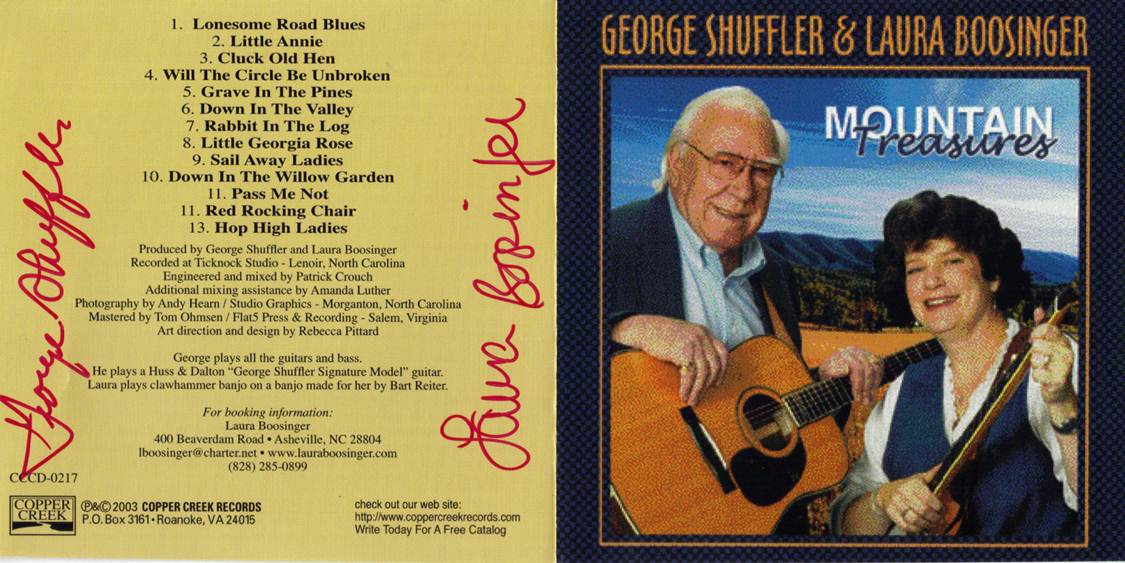
Shuffler and Boosinger Shuffler and Boosinger

of my bucket list items (the ultimate would be a gig on the “Prairie Home Companion Show” while Garrison Keillor is still on earth!).  But a lot of that time was “exploring my roots,” musical, theological and spiritual—which led to a week at Steve Kaufman’s Acoustic Kamp.

I’d been to the Kamp before, in Maryville, Tennessee.  Unless you are a devotee of the guitar and acoustic cousins like the mandolin, the “fiddle” (violin played a certain way), bass, banjo or dobro, you don’t realize that hundreds of camps happen every year across the world where musicians gather and play and learn the heritage of “roots” music—folk, jazz, country, celtic, and so on. In these places, campers rub shoulders with the legends of bluegrass, swing, fingerpicking and new acoustic music.  I met legends like Bill Keith, Clarence White, Continue reading “Mapping the Bluegrass Genome”