Stories and tales from a guitar-picking writer, theologian, speaker, blogger and entertainer. From small town quirks to the bizarre realities of family, whacky church life and slightly damaged kinfolk, insights from a reluctant son of the South takes you along. Never know where it’ll end up but it’s sure to be worth the trip.
Indians Sue for Possession of the U.S.: Ask for Return of Lands and Deportation of Euro-Americans (Imaginary Press Release) The immigration crisis in the United States took an unexpected turn today when Native Americans launched a lawsuit to deport all European descendants from the US back to their homelands. Following the recent Supreme Court decision on immigration, leaders representing all the major tribes gathered together at Little Big Horn to announce an impending lawsuit. They are seeking a lawsuit to remove all European Americans whose ancestors emigrated to this country illegally during the past 300 years, claiming that they had … Continue reading What If…I
I’ll admit it—I long for Mayberry and simpler living.
Maybe it never existed, but something in us says, “It ought to.”
Andy Griffith died today on the Outer Banks of his native North Carolina where he lived. A few years ago, I took my senior adults to the Outer Banks, and, other than seeing the place where “Nights of Rodanthe” was filmed and hearing about how one native got to be examined by Richard Gere as a bit part, the biggest thrill was hearing that Andy lived there still. “You can still see him in the grocery store and he is an active part of the community,” she said solemnly.
We were the Baptist version of medieval pilgrims tracing the steps of a saint. Andy Griffith, though Moravian, taught more Baptists their character virtues than almost anyone I knew.
Being a native of North Carolina, I fastened onto the Andy Griffith Show at an early age. I was in elementary school when the show was on the air. Andy, Aunt Bee, Otis Campbell, Thelma Lou and Helen, Goober, Gomer, Opie and Barney Fife were childhood friends. I know a lot of the bits by part—I’ve watched and re-watched the reruns my whole adult life. “Why do you watch the same shows over and over?” my wife asks. But even she will watch “Aunt Bee the Warden” (she has a secret desire to imprison lazy men and beat them with a broom) and “Class Reunion,” and “Mr. McBeevy,” and all the others over and over.
It has been analyzed to death, of course. From its lack of diversity to its nostalgia overdoses, the show has taken its share of hits. And we all keep watching. Having lived in small towns, of course, I can say “The Andy Griffith Show” was half of the equation—the ideal, good half. Andy did capture the foibles, silliness and pettiness, but missing was meanness, racism and evil. Continue reading “Andy Griffith’s Kinder, Gentler Community”
We prefer a safe mediocrity to a persuasive truth telling.
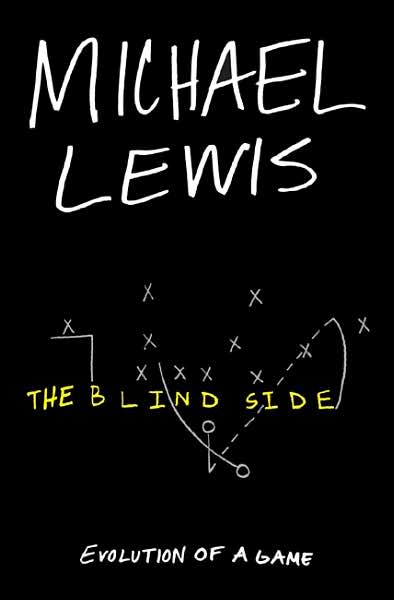
Baptist news wires recently carried the story about a successful protest by a Baptist preacher to remove a movie from Lifeway stores. The movie is “The Blind Side,” starring Sandra Bullock. It was based on the book by the same name by Michael Lewis, who also wrote, Liar’s Poker and Moneyball.
Michael Lewis
I happened to meet Michael Lewis years ago when he was writing the book, and he told me he was working on a “really interesting story.” It was about a young man from the meanest streets of Memphis who was adopted by a family and placed in a white private Christian school. The story is well known by now—Michael Oher went on to be a football star at the University of Mississippi and now plays for the Baltimore Ravens.
I bought and read the book when it came out, and went to see the film. Football movies are pretty well required viewing in Alabama. So I was more than amused with all the other moral problems at the moment—debt, wars, racism, the disintegration of families, and do I need to go on?—that a PG-13 movie could cause such an uproar. According to the report,
LifeWay Christian Stores will no longer sell videos of “The Blind Side” after a Florida pastor proposed a resolution for next week’s Southern Baptist Convention annual meeting protesting the sale of a PG-13 movie that contains profanity and a racial slur…[the stores decided to] pull the movie, an inspirational film starring Sandra Bullock that tells the true story of a white Christian family that adopted a homeless black teenager who went on to play in the NFL, to avoid controversy at the June 19-20 SBC annual meeting in New Orleans. [The pastor who brought the resolution] said there is much about the film to be commended, but there is no place in a Christian bookstore for a movie that includes explicit language that includes taking God’s name in vain.
I get it. It’s Baptist to speak your mind. I know language has become debased and misused. And, it’s the right of any store and its owners to sell or not sell what it wishes. Still, it stirred a few thoughts about the mostly non-existent tie between Christians, especially evangelical ones, and the world of the arts. And why fewer people want to be Baptists.
Walter Brueggemann once said that in the book of Leviticus, which for some odd reason has become a moral center for a lot of people today, there is an emphasis on holiness as “purity.” There are other forms of holiness in scripture—moral and ethical righteousness, for one, that sometimes comes into conflict with the notion of purity. Jesus encountered this among the Pharisees, who could not do the deeper right things for fear of disturbing their own ethic of remaining personally removed from what might compromise, taint and violate their ethic of purification holiness.
I have thought a lot about Brueggemann’s distinction since I first read it. Somehow, a fully biblical notion requires more than avoiding “impurities.” Yet purity is important. An obsession seems to lead always to a rather puny moral energy that dispirits more than it inspires. Inevitably, it ends up with an account of morality that is always boycotting, removing itself from sinners and sin, and circling the wagons.
Corporations are not necessarily evil in and of themselves, but the net effect can be the disappearance of everything that makes the place where you live distinctive. Got a notice from my friend Steve Norris that our friend Dale Short put us on his “Music From Home” radio program yesterday. (LISTEN) (SMA is on the first program) Thanks, Dale! “Music From Home” is local artists. I appreciate that there are still programs here and there in a world in which globalized corporate mass culture (which is short for “controlled by a few people who are not always interested in the … Continue reading Think Globally Listen Locally
There were times as a young man when I complained to myself A memory of Dad…where do you start? I have pictures in my mind. First, of looking up at this tall, silent man. Looking up in fear sometimes, in awe most of the time as he went about life. He was strong, good, quiet, rarely angry with us. I looked up when I read his scrapbooks, hook shots flying through the air, frozen forever as the ideal athlete. Playing catch in the backyard or playing basketball while he watched, always the same. You were the mount Everest of my … Continue reading Memories of Dad




 The Flatpickin' Pilgrim's Progress