Andy Griffith’s Kinder, Gentler Community

I’ll admit it—I long for Mayberry and simpler living. 

Maybe it never existed, but something in us says, “It ought to.”

Andy Griffith died today on the Outer Banks of his native North Carolina where he lived.  A few years ago, I took my senior adults to the Outer Banks, and, other than seeing the place where “Nights of Rodanthe” was filmed and hearing about how one native got to be examined by Richard Gere as a bit part, the biggest thrill was hearing that Andy lived there still.  “You can still see him in the grocery store and he is an active part of the community,” she said solemnly.

We were the Baptist version of medieval pilgrims tracing the steps of a saint.  Andy Griffith, though Moravian, taught more Baptists their character virtues than almost anyone I knew.

Being a native of North Carolina, I fastened onto the Andy Griffith Show at an early age.  I was in elementary school when the show was on the air.  Andy, Aunt Bee, Otis Campbell, Thelma Lou and Helen, Goober, Gomer, Opie and Barney Fife were childhood friends.  I know a lot of the bits by part—I’ve watched and re-watched the reruns my whole adult life.  “Why do you watch the same shows over and over?” my wife asks.  But even she will watch “Aunt Bee the Warden” (she has a secret desire to imprison lazy men and beat them with a broom) and “Class Reunion,” and “Mr. McBeevy,” and all the others over and over.

It has been analyzed to death, of course.  From its lack of diversity to its nostalgia overdoses, the show has taken its share of hits.  And we all keep watching.  Having lived in small towns, of course, I can say “The Andy Griffith Show” was half of the equation—the ideal, good half.  Andy did capture the foibles, silliness and pettiness, but missing was meanness, racism and evil. Continue reading “Andy Griffith’s Kinder, Gentler Community”

The Songs Remember When Part II by Gary Furr

…there are aspects of humanity that are not reducible to particles, chemicals and rational analysis. In my last post, I reflected on the interesting work of Oliver Sacks on memory.  A few further thoughts about the whole notion of science, faith, and humanity. Sacks has been criticized roundly for his “anecdotes” that don’t meet all the rigor of some scientific requirement, especially by the radical reductionists.  Some believe that  “there is no self or soul.  We are merely the product of our acculturated experiences and brain physiology and when it’s gone, so are we.” But there is something instinctive that … Continue reading The Songs Remember When Part II by Gary Furr

The Songs Remember When: Part I

“The Lord…gave me these sounds.” 

Oliver Sacks is a British-born neurologist whose maverick investigations inspired the Academy-Award winning movie, “Awakenings” and who gained notoriety for his book, The Man Who Mistook His Wife for a Hat, a collection of unusual cases of mental and emotional issues.  He is, as his website puts it, “physician, a best-selling author, and professor of neurology and psychiatry at the Columbia University Medical Center,” even being named the first Columbia University artist forhis contributions to the arts.  In his book Musicophilia, “Dr. Sacks investigates the power of music to move us, to heal and to haunt us.”

In his “Music and Memory Project,” Dr. Sacks collected and investigates the power of music on memory.  It is tempting, and I have even said this sometimes myself in thinking about identity, that when memory goes, so does our sense of identity and self.  Who am I when I can’t remember any more.  So often in my vocation I hear people say, “Mom left us long ago.”  In Alzheimer’s disease and related disorders, an individual descends into a solitary cocoon of long-term memories, and then finally into silence before death.  Where did what we knew as “the person” go?

A friend recently shared a very moving video posted on YouTube of Sacks’ project.   CLICK HERE TO VIEW    It is a remarkable record of a man named who has debilitating case of Parkinson’s disease which rendered him inert and lifeless most of the time.  They learned from his family about some of his favorite music from Cab Calloway and others early in his life and put it on an MP3 player and put on the ear phones.  The transformation is remarkable.  He is alive again, eyes bright and he begins to move to the rhythm and sing along.  A glow of life continues after the music is taken away.

He says, at the end, “The Lord…gave me these sounds.”  There is something remembered in our bodies, our minds, our selves, deep and irreplaceable.  Human beings and the earth God made are sacred, all of it.  We should treat it that way. Continue reading “The Songs Remember When: Part I”

“Blue Like Jazz”: Not Your Father’s Evangelical Movie

 “Blue Like Jazz” arrived at selected theaters this past week, an odd stepchild among usual movie fare of aliens, vampires, and things that go boom.  Derived from Donald Miller’s book by the same name, “Blue Like Jazz” is a story of life and faith during a young man’s first year of college.  Don, the main character, is son of a bible believing single mother who wants to protect her son and an atheist  father who is emotionally disconnected, mostly absent, and religiously hostile.

Donald’s Dad wangles an acceptance from Reed College in Portland, Oregon, a school filled with intellectually brilliant and morally unfettered not-quite-adults.  After struggling with it, he heads to Reed and Portland instead of the Baptist college his mother wants him to attend.  Soon life is filled with Political Correctness, drugs, booze and moral haze.   The professors challenge every aspect of life, and students engage in protest and outrageousness as an extracurricular activity.

From that point we follow Don as he struggles with the pain of the life he has left behind but the faith that won’t leave him alone.  He is ashamed of that identity, and tries to fit in, but never really does.  The church is an ambiguous presence throughout the movie.  The childhood church that Don leaves behind is a stereotype of tacky children’s sermons and fear of the world.  The youth pastor is glib, a know-it-all, self-assured, and, it turns out, secretly sleeping with Don’s mother, which brings a crisis into his life later in the story. Continue reading ““Blue Like Jazz”: Not Your Father’s Evangelical Movie”

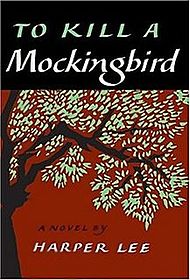
To Kill A Mockingbird…50 years later

Here in Alabama, To Kill a Mockingbird is one of our great treasures.  You can still go to Monroeville, Alabama and see a live re-enactment of the story every year by the local citizenry.  You start out in the yard, then move inside the courthouse, and it is eerily reminiscent of the movie because Hollywood built a replica of it for the film.  When I went with friends a few years back, I felt a flash of shame and pain when the n-word was uttered while African American locals up in the balcony were in our presence.  I was embarrassed.  So we’ve made some progress, I guess.  As a child in North Carolina the word was uttered around me thoughtlessly, as a part of an unquestioned culture of resentment and vulnerable entitlement. Continue reading “To Kill A Mockingbird…50 years later”