Death Grief and Hope: Songs for the Shadows (2)

So, then, to continue from my last post, If we are not to grieve as those who have no hope, and not to hope as those who have no grief, then only one conclusion is left to us.  We should grieve as people of hopeso what does that mean?

Here is where grace enters in powerfully.  “Grieving as people of hope” means that God’s grace is in the picture with us as we sorrow in life.  Grace does not magically take away our pain or make it hunky-dory wonderful.  I have heard preachers stand up and talk about heaven and hope in a glib and superficial silliness that emotionally slaps the faces of the grieving ones sitting in front of him or her.  If it gives them a moment’s comfort, the dark shadow will soon come.  If Jesus wept over Lazarus, there is something important in it for us as well. Whatever we believe about the life to come, it is always in faith, in part, clouded by the contrast between the only reality we know with some certainty against a promise that is yet to be.

Paul helps us in a second passage from the New Testament. In 2 Corinthians 4:7-9 he wrote, “But we have this treasure in clay jars, so that it may be made clear that this extraordinary power belongs to God and does not come from us. We are afflicted in every way, but not crushed; perplexed, but not driven to despair; persecuted, but not forsaken; struck down, but not destroyed; Afflicted but not crushed.”

  1. Perplexed but not driven to despair
  2. Persecuted but not forsaken
  3. Struck down but not destroyed

What sustains us in life is not to escape affliction, questions, persecution and suffering.  It is being rooted in the life that transcends it. This means accepting

  1. The reality of death—as well as the truthfulness of grace. It not only does not avoid the worst features of human life, it enters into them.  Grace is seeing the worst about us and still loving us. I once wrote a song to try to express the anguish of this, called,
  2. The necessity of grief— Grief is part of life just as death is on its path. If we are to imbibe life as a gift, we have also to taste its bittersweet transience.  In the nineteenth century, Ray Palmer wrote the great hymn, “My Faith Looks Up to Thee,” and penned these wonderful words:

When ends life’s transient dream,
When death’s cold sullen stream shall o’er me roll;
Blest Savior, then in love, fear and distrust remove;
O bear me safe above, a ransomed soul!

I have written about 110 songs at this point, bits and fragments of maybe 250 more, but looking over them, I realize how much time grieving has occupied in my mind. I am sure much of this has to do with my vocation–I cannot avoid walking through the valley of someone else’s shadow weekly–but I am also impressed with the massive  energy spent on avoiding the subject in our culture–and the price we pay for it. One song on this subject for today, “Trying to Remember” Continue reading “Death Grief and Hope: Songs for the Shadows (2)”

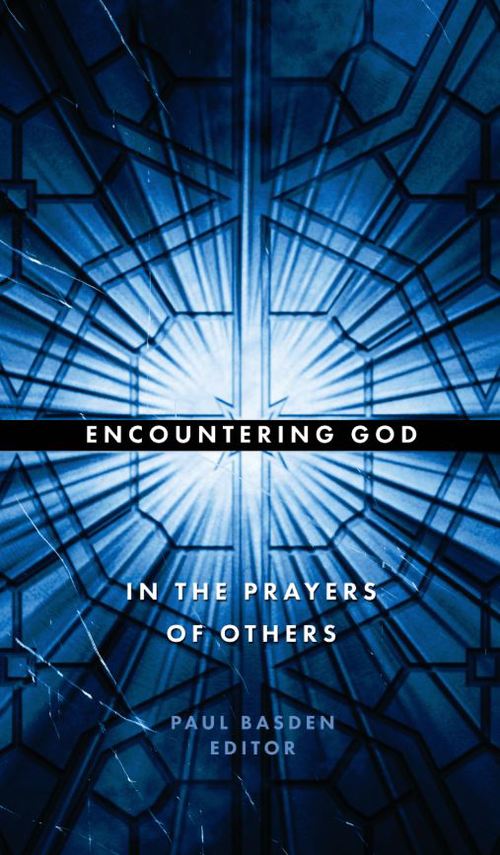
Our new book: Encountering God in the Prayers of Others

Encountering God in the Prayers of Others is
our latest collective effort. It springs from experience
in our spiritual lives of prayers
composed by others that have “spoken” to us.

The Trinity group is a self-named group of friends, all Ph.D. grads

CONTRIBUTORS Paul Basden, R. LaMon Brown, Brad Creed, Gary Furr, Fisher Humphreys, Dwight A. Moody, Richard Francis Wilson

in theology or closely related fields who have chosen to journey together theologically for 25 years. The group was initiated by our teacher-friend Fisher Humphreys.  It includes missionaries, pastors, college and seminary professors and a chaplaincy supervisor.

Through the years, we have created a space, meeting once or twice a year for multiple days, to have intellectual, spiritual and theological freedom to read, study, comment, question and debate any subject together that interested or troubled us. The glory of such freedom has enhanced all of our lives.

One of our founders, Philip, died six years ago this March. He was the first close friend some of us had lost, and he was in so many ways a force and center of our group. His loss was enormous, but we carried on. That experience, of walking with a friend to his grave, literally in my own case, was profound. And it mirrors what happens in the theological journey—it is always, inevitably, personal at the same time that we seek the loftiest and most universal of vantage points from which to do theology. Continue reading “Our new book: Encountering God in the Prayers of Others”

Grief Work in the Basement Garden 2: Songs for the Journey

I once heard someone say that Loretta Lynn described country music as consisting of three kinds of songs:  “Songs about love, cheatin’ songs, and songs about Jesus.”  That may be so, but I don’t know of anything that a good song can’t touch.  In my last post, I mentioned songs that had spoken to me in my own grief through the years.  Usually they are songs that simply “find us,” a synchronicity of expression and need.  You hear it and it unearths sorrow or whatever from the deepest part of you, puts it up where you can feel it and … Continue reading Grief Work in the Basement Garden 2: Songs for the Journey

Grief Work in the Basement Garden

This blog is drawn in part from some chapters I’m writing for a forthcoming book on prayer from Insight Press.  I’ll announce it when it is available for purchase on this site. Moments of sensitivity to God’s presence happen in the oddest places—foxholes, pinned in a car wreck, hospital waiting rooms, lying in bed when you can’t sleep.  People report God’s presence when life is unraveling, but also sitting on the porch on a quiet afternoon.  Holding a baby.  Counting blessings.  Waking up and drinking coffee.  Chance encounters.  Prison cells, torture rooms, earthquakes and financial ruin.  A meal with friends, … Continue reading Grief Work in the Basement Garden

Thank You, Ella Jones: Churches, the Arts and Why They Matter

I nearly always prefer the hidden, obscure, local and unnoticed to the Big Stuff.  Celebrity…zzz…even small pond big fish I find relatively uninteresting.  It’s just all so predictable and often pompous.  When I opened today’s Birmingham News, the top of the front page, as usual, was about Alabama and Auburn football, which is as always.  You just have to understand that in Alabama, I would fully expect to see this on a front page: TIDE LANDS FOUR FIVE STAR RECRUITS AUBURN HOPES NEW DEFENSIVE COACH WILL “TURN THE TIDE” NUCLEAR WAR PROBABLE IN NEXT FEW DAYS (Section B) GOD SAYS … Continue reading Thank You, Ella Jones: Churches, the Arts and Why They Matter