Dangling Participles: News at 6

The 24-7 news cycle has changed our lives and made even

the most meaningless information a way to waste time on the planet.

A story on the morning news recentlywas about a local election in Arizona.  The Arizona Supreme Court upheld a law this week that banned a woman who could not speak English proficiently from running in a local city council race.  The

BREAKING NEWS

point of those who sued to remove her was that a certain level of sophistication in the English language was essential to being an elected official.  Who in the world came up with THAT?

The woman, who spoke in elemental English, was actually given a hearing in which she was examined for her language skills.  A clip on the news showed a lawyer asking the following:

            Lawyer: “And when did you go to high school?”

            Woman: “In the 1980s.”

            Lawyer: “And where was that at?”

Excuse me?  Buddy, you just dangled a participle.  My old-school English teachers would be all over you.  If you can be a lawyer without proficiency in grammar, it seems reasonable that you could run for office and let the voters decide.

It is the silliest of seasons, that is, an election year.  Actually, “election year” has followed the 24-7 news cycle to become a 24-7 political season.  Pols immediately begin re-election campaigns the day after they get elected now.  Since there are only about 18 minutes of actual newsworthy occurrences each day and the major news networks only cover about 11 of that, it leaves a lot of time to fill.  Fortunately, tomfoolery and goofiness fills the void.

There are now three major forms of commentators that have evolved in this present environment.  First, there are the pioneers, the radio partisans and their television counterparts.

The  Wingnuts of every kind dominate here.  The form is simple:  you go on the air/television and talk ceaselessly to an imaginary person for hours.  You would never respond to an enraged man walking down the street like this, fuming and talking to an imaginary person..  You would call 911 and report him so the state hospital could come pick him up before he hurts himself or someone else.

The second form is more sophisticated.  People sit together and argue about politics in front of everyone watching.  There is more value perhaps, but still, not much is left to say after, oh, about four minutes on a particular item.

C. S. Lewis said in his autobiography that his father and their friends would often sit and discuss politics.  He and his brother concluded that nothing very interesting ever came of these discussions.  Their real passion was the world of imagination and ideas.  So at least we have politics to thank for Narnia and The Great Divorce.  A great thesis for some Oxford young don:  “Boredom’s Contribution to the Imaginative Work of C. S. Lewis.”

The third, of course, is comedy politics.  Stephen Colbert and Jon Stewart have cornered the market here.  Colbert is the more sophisticated—he pretends to be the very things he ridicules and takes it to hyperbolic excess.  He exaggerates, too.  One has to observe, this is too easy. Continue reading “Dangling Participles: News at 6”

“Blue Like Jazz”: Not Your Father’s Evangelical Movie

 “Blue Like Jazz” arrived at selected theaters this past week, an odd stepchild among usual movie fare of aliens, vampires, and things that go boom.  Derived from Donald Miller’s book by the same name, “Blue Like Jazz” is a story of life and faith during a young man’s first year of college.  Don, the main character, is son of a bible believing single mother who wants to protect her son and an atheist  father who is emotionally disconnected, mostly absent, and religiously hostile.

Donald’s Dad wangles an acceptance from Reed College in Portland, Oregon, a school filled with intellectually brilliant and morally unfettered not-quite-adults.  After struggling with it, he heads to Reed and Portland instead of the Baptist college his mother wants him to attend.  Soon life is filled with Political Correctness, drugs, booze and moral haze.   The professors challenge every aspect of life, and students engage in protest and outrageousness as an extracurricular activity.

From that point we follow Don as he struggles with the pain of the life he has left behind but the faith that won’t leave him alone.  He is ashamed of that identity, and tries to fit in, but never really does.  The church is an ambiguous presence throughout the movie.  The childhood church that Don leaves behind is a stereotype of tacky children’s sermons and fear of the world.  The youth pastor is glib, a know-it-all, self-assured, and, it turns out, secretly sleeping with Don’s mother, which brings a crisis into his life later in the story. Continue reading ““Blue Like Jazz”: Not Your Father’s Evangelical Movie”

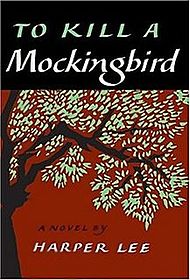
To Kill A Mockingbird…50 years later

Here in Alabama, To Kill a Mockingbird is one of our great treasures.  You can still go to Monroeville, Alabama and see a live re-enactment of the story every year by the local citizenry.  You start out in the yard, then move inside the courthouse, and it is eerily reminiscent of the movie because Hollywood built a replica of it for the film.  When I went with friends a few years back, I felt a flash of shame and pain when the n-word was uttered while African American locals up in the balcony were in our presence.  I was embarrassed.  So we’ve made some progress, I guess.  As a child in North Carolina the word was uttered around me thoughtlessly, as a part of an unquestioned culture of resentment and vulnerable entitlement. Continue reading “To Kill A Mockingbird…50 years later”

Farewell, Earl Scruggs, and Thank You

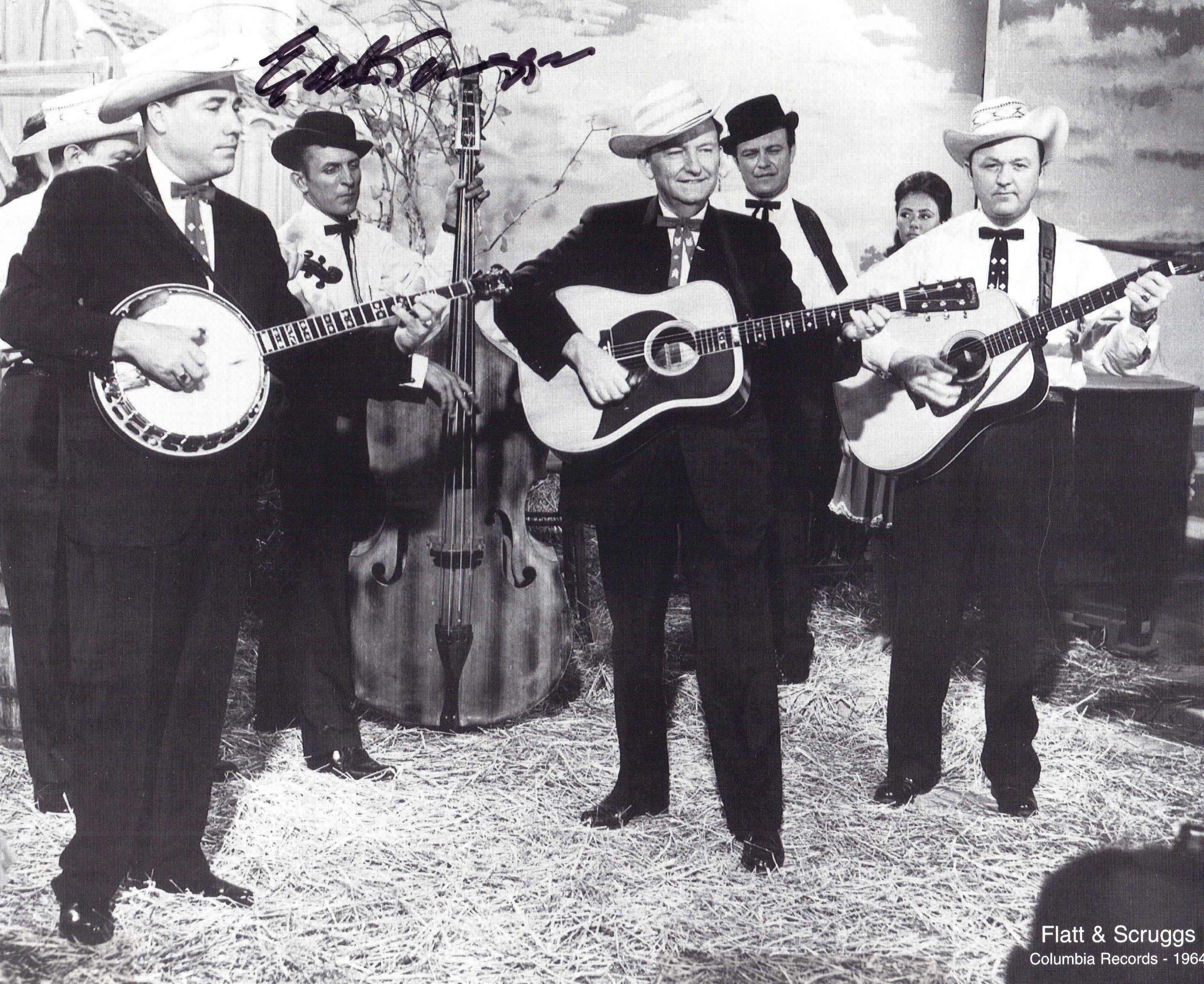
1964, on top of the world, with Lester Flatt

Earl Scruggs, “pioneer” as the Huffington Post put it,  of the Three-finger Banjo style, has died.  For some of us, he has been a mentor and inspiration our whole lives.   He was not merely a pioneer, he was the King.  And there are many legends on the banjo–Bela Fleck, Ralph Stanley, Jens Kruger, Don Reno, J. D. Crowe, and many greats.  But no one like Earl.

As a displaced North Carolina boy moving around the country, my Dad kept me connected to music.  He had a Silvertone electric guitar from Sears and a Harmony archtop acoustic guitar.  The electric would shock you if you played in bare feet on the garage floor so I tended to play the acoustic.  I didn’t know much about Earl Scruggs, but I kept running into him over the years.

When we moved to Irving, Texas in the late Sixties, I learned to play very slow rhythm guitar to a very slow “Foggy Mountain Breakdown” and “The Ballad of Jed Clampett” (LISTEN) with my seventh grade friend,  Brad Phillips, who was the odd combination of a banjo playing Episcopalian. Continue reading “Farewell, Earl Scruggs, and Thank You”

Finding Your Voice

Gary Furr

It’s become a cliche only because it is so powerful and pervasive.  Your “voice,” I once heard songwriter Pat Terry say, is what makes people say, “That’s a Gary Furr song” or “that’s a (your name here) story.’  I have thought about this for thirty years, focused when I once, during a five day solitary retreat started to say a short prayer I had been using to center myself and blurted out, “Father, help me to be myself.

If that sounds so very self-centered in our culture already so “you-can-be-whatever-you-want-to-be,” permit me to observe that despite our coaching of selves and self-focus I sure meet a lot of broken ones out there in life.  People wounded and held back by a voice in their head:  “you’ll never amount to anything,” and somettimes not even traumatic voices–just ones we imbibe from our world.  “So many people are better than you.  What do you have to offer?  What’s the point?” Continue reading “Finding Your Voice”