Cynicism and Forgiveness

“Forgiveness” is my wife’s favorite song on my new CD.  (Click HERE to listen to the song)  The chorus goes:

It’s impossible to give forgiveness

It’s even worse to have to ask

If letting go is the answer

Living like it’s gone is the task.

How else you going to deal with the past?

Lance Armstrong and General Petraeus in one year are maybe more than we can take, even in our jaded time.  I find myself turning it all off more and more just to preserve my soul.  Cynicism can cripple the spirit.  It can rest on the belief that everything is a con, everybody is out to get you, all politicians are evil, and all human beings’ motives are bad.  While Christians might be seen to have a lot in common with that, what with the fall of humanity and all, I’m here to say, “Not really.”

The Christian gospel is not as much about how bad we are as that God knows it and loves us anyway.  Sin is not what lives on at the end of the day.  Its moment is the middle of a Friday with a dark sky and a rugged cross and a man yelling, “It is finished.”  But the last word is an empty tomb, followed by a hopeful church, a Holy Spirit, and a kingdom to come.

So as Thanksgiving approaches, it might do well for us to think about how to defeat it in our lives.  I want to offer two helpful practices from our faith that can be an antidote to cynicism. Continue reading “Cynicism and Forgiveness”

Love Lifted Me: a 9-11 Story

Sometimes hope only bubbles up in the small delicate places that are almost unnoticed among the debris of history  What do 9-11, a pregnant woman, an orphan immigrant from Burkina-Faso, and a store specializing in Afro-pop music have in common?   And on a day of such sadness, are there flickers of hope to fasten to? Sometimes hope only bubbles up in the small delicate places that are almost unnoticed among the debris of history and humanity’s terrible bent to self-destruction.  If we cannot always fathom the great purposes of God in the rumblings of nations and enemies, we can listen … Continue reading Love Lifted Me: a 9-11 Story

Andy Griffith’s Kinder, Gentler Community

I’ll admit it—I long for Mayberry and simpler living. 

Maybe it never existed, but something in us says, “It ought to.”

Andy Griffith died today on the Outer Banks of his native North Carolina where he lived.  A few years ago, I took my senior adults to the Outer Banks, and, other than seeing the place where “Nights of Rodanthe” was filmed and hearing about how one native got to be examined by Richard Gere as a bit part, the biggest thrill was hearing that Andy lived there still.  “You can still see him in the grocery store and he is an active part of the community,” she said solemnly.

We were the Baptist version of medieval pilgrims tracing the steps of a saint.  Andy Griffith, though Moravian, taught more Baptists their character virtues than almost anyone I knew.

Being a native of North Carolina, I fastened onto the Andy Griffith Show at an early age.  I was in elementary school when the show was on the air.  Andy, Aunt Bee, Otis Campbell, Thelma Lou and Helen, Goober, Gomer, Opie and Barney Fife were childhood friends.  I know a lot of the bits by part—I’ve watched and re-watched the reruns my whole adult life.  “Why do you watch the same shows over and over?” my wife asks.  But even she will watch “Aunt Bee the Warden” (she has a secret desire to imprison lazy men and beat them with a broom) and “Class Reunion,” and “Mr. McBeevy,” and all the others over and over.

It has been analyzed to death, of course.  From its lack of diversity to its nostalgia overdoses, the show has taken its share of hits.  And we all keep watching.  Having lived in small towns, of course, I can say “The Andy Griffith Show” was half of the equation—the ideal, good half.  Andy did capture the foibles, silliness and pettiness, but missing was meanness, racism and evil. Continue reading “Andy Griffith’s Kinder, Gentler Community”

The Songs Remember When: Part I

“The Lord…gave me these sounds.” 

Oliver Sacks is a British-born neurologist whose maverick investigations inspired the Academy-Award winning movie, “Awakenings” and who gained notoriety for his book, The Man Who Mistook His Wife for a Hat, a collection of unusual cases of mental and emotional issues.  He is, as his website puts it, “physician, a best-selling author, and professor of neurology and psychiatry at the Columbia University Medical Center,” even being named the first Columbia University artist forhis contributions to the arts.  In his book Musicophilia, “Dr. Sacks investigates the power of music to move us, to heal and to haunt us.”

In his “Music and Memory Project,” Dr. Sacks collected and investigates the power of music on memory.  It is tempting, and I have even said this sometimes myself in thinking about identity, that when memory goes, so does our sense of identity and self.  Who am I when I can’t remember any more.  So often in my vocation I hear people say, “Mom left us long ago.”  In Alzheimer’s disease and related disorders, an individual descends into a solitary cocoon of long-term memories, and then finally into silence before death.  Where did what we knew as “the person” go?

A friend recently shared a very moving video posted on YouTube of Sacks’ project.   CLICK HERE TO VIEW    It is a remarkable record of a man named who has debilitating case of Parkinson’s disease which rendered him inert and lifeless most of the time.  They learned from his family about some of his favorite music from Cab Calloway and others early in his life and put it on an MP3 player and put on the ear phones.  The transformation is remarkable.  He is alive again, eyes bright and he begins to move to the rhythm and sing along.  A glow of life continues after the music is taken away.

He says, at the end, “The Lord…gave me these sounds.”  There is something remembered in our bodies, our minds, our selves, deep and irreplaceable.  Human beings and the earth God made are sacred, all of it.  We should treat it that way. Continue reading “The Songs Remember When: Part I”

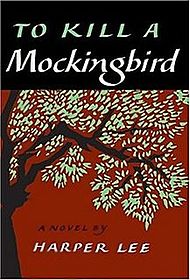
To Kill A Mockingbird…50 years later

Here in Alabama, To Kill a Mockingbird is one of our great treasures.  You can still go to Monroeville, Alabama and see a live re-enactment of the story every year by the local citizenry.  You start out in the yard, then move inside the courthouse, and it is eerily reminiscent of the movie because Hollywood built a replica of it for the film.  When I went with friends a few years back, I felt a flash of shame and pain when the n-word was uttered while African American locals up in the balcony were in our presence.  I was embarrassed.  So we’ve made some progress, I guess.  As a child in North Carolina the word was uttered around me thoughtlessly, as a part of an unquestioned culture of resentment and vulnerable entitlement. Continue reading “To Kill A Mockingbird…50 years later”