Between Cross and Easter

Of late, not only in my ministry work, but through the connections of social media, I have been highly conscious of the processions of sorrow that go on around us in the midst of life. In my work, we are walking near every kind of brokenness and sorrow in the world every week, then trying hard to stand up and proclaim hope on Sunday.

Brokenness comes in so many different forms, but it all shares one truth–suddenly we are in a room with no walls to keep predators out, no roof to shield us from torrential storms, no floor to stop us from going down. WIth that comes temptation to panic, that we might absolutely burst from the heaviness of it all. It is here that faith matters most if it matters at all.

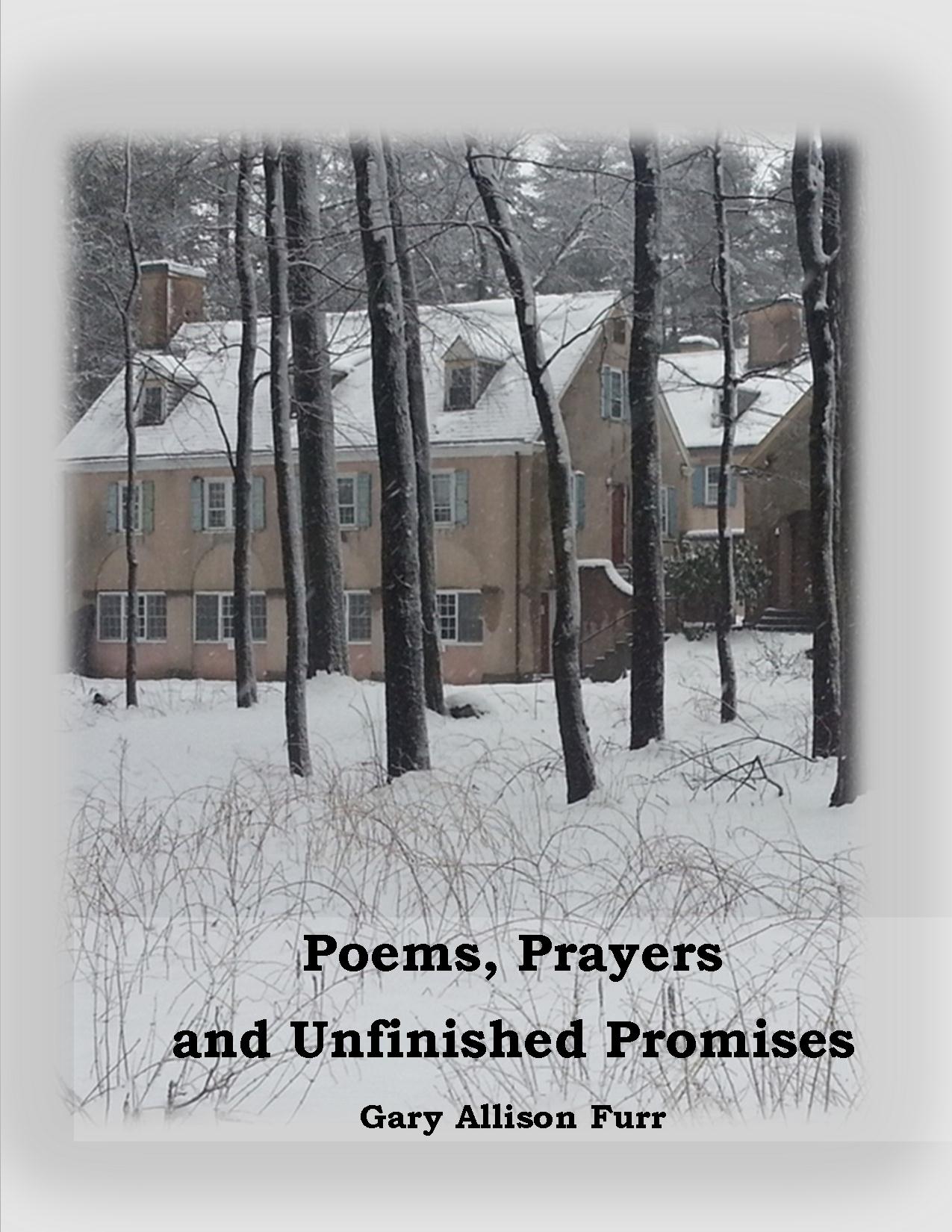
This prayer is from my 2015 book, Poems, Prayers and Unfinished Promises.  It was a prayer given originally as an invocation to a performance of the Requiem by John Rutter. If you are in that place, perhaps it would be of some encouragement today.

We came here tonight to wait and to hope

That tombs and sorrow and death and loss
Are only prelude

To seek the Living shepherd,

Beyond our doubts, beyond our fears,

From death into life.

We wait faithfully

Hoping that

You might meet us in our gardens of sorrow as you met Mary,

We wait for unexpected visions in the midst of our tears.

And for you to come to us

As you came to them behind the locked doors of fear

To wait tonight is enough

For tomorrow we will walk to the tomb again Continue reading “Between Cross and Easter”

Abide With Me

Henry Francis Lyte was an Anglican priest who originally intended to be a doctor, but then entered the ministry. He was a prize-winning poet during his university years, and best known for his elegant hymn, “Abide With Me.” He continued to write religious poetry through his life.  He was born in 1793 and died when he was only fifty-four years of age. The first verse captures a transcendent and haunting mood: “Abide with me; fast falls the eventide; The darkness deepens; Lord, with me abide. When other helpers fail and comforts flee, Help of the helpless, O abide with me.” … Continue reading Abide With Me

Down in Bethlehem

Today I am beginning a series of blogs about songs, more specifically songs I have written. I want to write a little about their “births,” as for me, songs are like children, or at least like the ugly ash tray I made out of clay at camp. They are mine, they mean something to me, and I still love singing them. Today, I’ll start with the first cut on my new album, “Down in Bethlehem.” I actually came up with the idea while writing a sermon, I guess it was during Advent of 2015. It’s a bit weird, really, to think of a third of humanity gathering every week to reflect on a two thousand year old set of texts, but in a time when we obsess over the latest thing, it’s a little comforting to me that we can mull over the same writing again and again, and like some prism being slowly turned in daylight, new colors of insight come.

I was struck by the commonality of the major stories about Bethlehem, that of Ruth, a Moabite widow who came as a foreigner immigrating back to her husband’s home’ David, the youngest of eight, who was selected by the prophet Samuel to replace Saul as king, and Jesus, born to a young couple shrouded in unimportance.  Again and again, in the Bible, God “chooses” to work with the “Most Likely Not to Be Chosen.” First I wrote a short poem to use in the sermon, then was haunted by it until this song came.

I was thinking about U2, Springsteen, music that is simple, driving, repetitive and building over time. Brent Warren does some really fine electric guitar work on this cut.  Take a listen and enjoy!  BUY or listen to it here. It still is true, I believe, that hope is a powerful and inexplicable reality, one that rises up unexpectedly and in the most unpromising of moments. That is when I suspect God might be up to something.  (see Ruth, 1 Samuel 16, Matthew 2 for the stories behind the song).  I’ve posted the whole song on my website for a week or so.  https://www.reverbnation.com/garyfurrmusic

Continue reading “Down in Bethlehem”

Death Grief and Hope: Songs for the Shadows (2)

So, then, to continue from my last post, If we are not to grieve as those who have no hope, and not to hope as those who have no grief, then only one conclusion is left to us.  We should grieve as people of hopeso what does that mean?

Here is where grace enters in powerfully.  “Grieving as people of hope” means that God’s grace is in the picture with us as we sorrow in life.  Grace does not magically take away our pain or make it hunky-dory wonderful.  I have heard preachers stand up and talk about heaven and hope in a glib and superficial silliness that emotionally slaps the faces of the grieving ones sitting in front of him or her.  If it gives them a moment’s comfort, the dark shadow will soon come.  If Jesus wept over Lazarus, there is something important in it for us as well. Whatever we believe about the life to come, it is always in faith, in part, clouded by the contrast between the only reality we know with some certainty against a promise that is yet to be.

Paul helps us in a second passage from the New Testament. In 2 Corinthians 4:7-9 he wrote, “But we have this treasure in clay jars, so that it may be made clear that this extraordinary power belongs to God and does not come from us. We are afflicted in every way, but not crushed; perplexed, but not driven to despair; persecuted, but not forsaken; struck down, but not destroyed; Afflicted but not crushed.”

  1. Perplexed but not driven to despair
  2. Persecuted but not forsaken
  3. Struck down but not destroyed

What sustains us in life is not to escape affliction, questions, persecution and suffering.  It is being rooted in the life that transcends it. This means accepting

  1. The reality of death—as well as the truthfulness of grace. It not only does not avoid the worst features of human life, it enters into them.  Grace is seeing the worst about us and still loving us. I once wrote a song to try to express the anguish of this, called,
  2. The necessity of grief— Grief is part of life just as death is on its path. If we are to imbibe life as a gift, we have also to taste its bittersweet transience.  In the nineteenth century, Ray Palmer wrote the great hymn, “My Faith Looks Up to Thee,” and penned these wonderful words:

When ends life’s transient dream,
When death’s cold sullen stream shall o’er me roll;
Blest Savior, then in love, fear and distrust remove;
O bear me safe above, a ransomed soul!

I have written about 110 songs at this point, bits and fragments of maybe 250 more, but looking over them, I realize how much time grieving has occupied in my mind. I am sure much of this has to do with my vocation–I cannot avoid walking through the valley of someone else’s shadow weekly–but I am also impressed with the massive  energy spent on avoiding the subject in our culture–and the price we pay for it. One song on this subject for today, “Trying to Remember” Continue reading “Death Grief and Hope: Songs for the Shadows (2)”

Death Grief and Hope: Songs for the Shadows

  We must face our losses.  Courage does not spare us from them. 

Courage’s work begins at the other end of honest acknowledgement.

          Grief can encompass many parts of life, not merely death.  It is, in many ways, our most universal experience.  It can be the death of dreams, grief of a way of life that ends, the end of a relationship, leaving home, moving to another town, divorce, a broken friendship.  The question is, “What are we to do with it?”

I can’t speak for people who have no faith in God, but I will admit that having faith in God doesn’t dispose of grief. It is just the same, just as overwhelming, the same disbelief followed by disintegration and despair and a long struggle to put life together again.

One verse of scripture I have found meaningful is  this one:

But we do not want you to be uninformed, brothers and sisters, about those who have died, so that you may not grieve as others do who have no hope.   1 Thess. 4:13

 I take great comfort that it does not say, “Don’t grieve, you’re a Christian,” but I have heard many a well-meaning minister stand up and talk about death like it was a flu shot. Death is real, it is irreversible, it is disheartening. I don’t think dismissing reality is a good idea. It has a way of showing up again with reinforcements.

The denial of death is, as Ernest Becker said, the most pervasive of human failings, and the most futile. The Apostle Paul said, very intentionally, that we should not “grieve as those who have no hope.” Instead, I would assume, we should grieve as people who DO have hope. Continue reading “Death Grief and Hope: Songs for the Shadows”