Standing Up for Children in Birmingham, Alabama

Several years ago, Dr. Penny Marler approached me about participating in a program where pastors might become

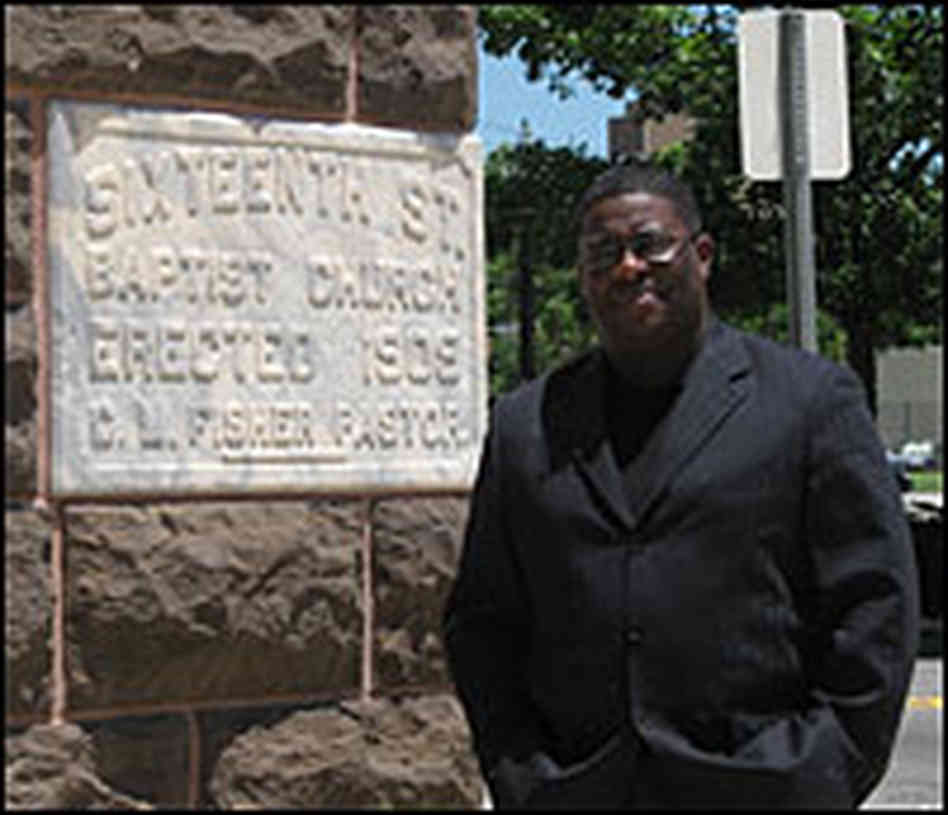
Rev. Arthur Price
Rev. Arthur Price

friends across differences—race, age, denomination—and learn from each other.  Rev. Arthur Price and I decided to make that journey together.  He is the pastor of historic Sixteenth Street Baptist Church in Birmingham, where, 50 years ago this fall, people driven by hate and fear set off a bomb that killed four little girls who had just prayed together.  The episode set off a national revulsion to the radical racists and helped put America in a new direction.

kthompson_PKDHAZ6R
Rev. Keith Thompson

Over the course of that few years, we became friends, Arthur much younger, a different personality, a native of the North, me a son of the South.  It was one of the richest experiences of my life, and it is documented on the website of the Resource Center for Pastoral Excellence.   (For more information about the project Rev. Price and I did together, click HERE)

One of the side blessings of that friendship was connecting our churches.  We visited each others’ deacons meetings, had our congregations together for fellowship, and continued our friendship by having breakfast together regularly over the years.  Last year, we began to talk together about doing something positive that would mark this anniversary by affirming that we are in a new day and that the faith community is part of that.  We were joined by another friend, Rev. Keith Thompson of First United Methodist Church downtown.

After the massacre at Newtown in December, our sense of commitment was heightened.  Whatever strikes at our Continue reading “Standing Up for Children in Birmingham, Alabama”

What If…I

Indians Sue for Possession of the U.S.: Ask for Return of Lands and Deportation of Euro-Americans (Imaginary Press Release)   The immigration crisis in the United States took an unexpected turn today when Native Americans launched a lawsuit to deport all European descendants from the US back to their homelands.  Following the recent Supreme Court decision on immigration, leaders representing all the major tribes gathered together at Little Big Horn to announce an impending lawsuit.  They are seeking a lawsuit to remove all European Americans whose ancestors emigrated to this country illegally during the past 300 years, claiming that they had … Continue reading What If…I

“The Blind Side” Gets Blindsided

We prefer a safe mediocrity to a persuasive truth telling.

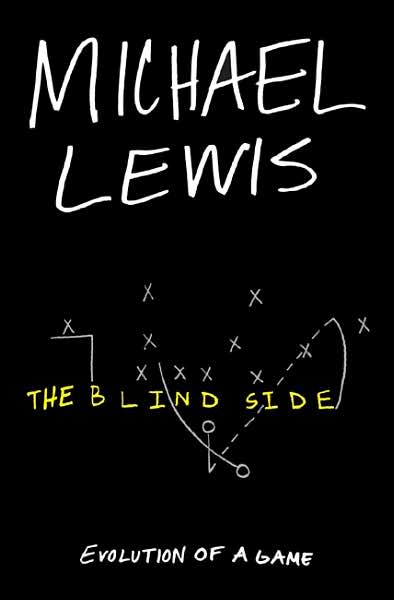
Baptist news wires recently carried the story about a successful protest by a Baptist preacher to remove a movie from Lifeway stores.  The movie is “The Blind Side,” starring Sandra Bullock.  It was based on the book by the same name by Michael Lewis, who also wrote, Liar’s Poker and Moneyball.

Michael Lewis

I happened to meet Michael Lewis years ago when he was writing the book, and he told me he was working on a “really interesting story.”  It was about a young man from the meanest streets of Memphis who was adopted by a family and placed in a white private Christian school.  The story is well known by now—Michael Oher went on to be a football star at the University of Mississippi and now plays for the Baltimore Ravens.

I bought and read the book when it came out, and went to see the film.  Football movies are pretty well required viewing in Alabama.  So I was more than amused with all the other moral problems at the moment—debt, wars, racism, the disintegration of families, and do I need to go on?—that a PG-13 movie could cause such an uproar.  According to the report,

LifeWay Christian Stores will no longer sell videos of “The Blind Side” after a Florida pastor proposed a resolution for next week’s Southern Baptist Convention annual meeting protesting the sale of a PG-13 movie that contains profanity and a racial slur…[the stores decided to] pull the movie, an inspirational film starring Sandra Bullock that tells the true story of a white Christian family that adopted a homeless black teenager who went on to play in the NFL, to avoid controversy at the June 19-20 SBC annual meeting in New Orleans.  [The pastor who brought the resolution] said there is much about the film to be commended, but there is no place in a Christian bookstore for a movie that includes explicit language that includes taking God’s name in vain.

I get it.  It’s Baptist to speak your mind.  I know language has become debased and misused.  And, it’s the right of any store and its owners to sell or not sell what it wishes.  Still, it stirred a few thoughts about the mostly non-existent tie between Christians, especially evangelical ones, and the world of the arts.  And why fewer people want to be Baptists.

Walter Brueggemann once said that in the book of Leviticus, which for some odd reason has become a moral center for a lot of people today, there is an emphasis on holiness as “purity.”  There are other forms of holiness in scripture—moral and ethical righteousness, for one, that sometimes comes into conflict with the notion of purity.  Jesus encountered this among the Pharisees, who could not do the deeper right things for fear of disturbing their own ethic of remaining personally removed from what might compromise, taint and violate their ethic of purification holiness.

I have thought a lot about Brueggemann’s distinction since I first read it.  Somehow, a fully biblical notion requires more than avoiding “impurities.”  Yet purity is important.  An obsession seems to lead always to a rather puny moral energy that dispirits more than it inspires.  Inevitably, it ends up with an account of morality that is always boycotting, removing itself from sinners and sin, and circling the wagons.

Continue reading ““The Blind Side” Gets Blindsided”

To Kill A Mockingbird…50 years later

Here in Alabama, To Kill a Mockingbird is one of our great treasures.  You can still go to Monroeville, Alabama and see a live re-enactment of the story every year by the local citizenry.  You start out in the yard, then move inside the courthouse, and it is eerily reminiscent of the movie because Hollywood built a replica of it for the film.  When I went with friends a few years back, I felt a flash of shame and pain when the n-word was uttered while African American locals up in the balcony were in our presence.  I was embarrassed.  So we’ve made some progress, I guess.  As a child in North Carolina the word was uttered around me thoughtlessly, as a part of an unquestioned culture of resentment and vulnerable entitlement. Continue reading “To Kill A Mockingbird…50 years later”

The Two Cases of Trayvon Martin

When it comes to the painful problem of race, it’s never about one thing…it’s about everything.  By Gary Furr The explosion that has occurred in recent days over the shooting of a Florida  teenager has reignited one of our oldest and most enduring debates.  The case of Trayvon Martin has caused outbursts between journalists, demonstrations and a weary “Will we ever be able to move past this?” cloud to hover again over us.  The gulf between the races is painfully obvious.  It sounds as though we are talking about two different cases.  And we are. In the late 1980s, I … Continue reading The Two Cases of Trayvon Martin