Death Grief and Hope: Songs for the Shadows

  We must face our losses.  Courage does not spare us from them. 

Courage’s work begins at the other end of honest acknowledgement.

          Grief can encompass many parts of life, not merely death.  It is, in many ways, our most universal experience.  It can be the death of dreams, grief of a way of life that ends, the end of a relationship, leaving home, moving to another town, divorce, a broken friendship.  The question is, “What are we to do with it?”

I can’t speak for people who have no faith in God, but I will admit that having faith in God doesn’t dispose of grief. It is just the same, just as overwhelming, the same disbelief followed by disintegration and despair and a long struggle to put life together again.

One verse of scripture I have found meaningful is  this one:

But we do not want you to be uninformed, brothers and sisters, about those who have died, so that you may not grieve as others do who have no hope.   1 Thess. 4:13

 I take great comfort that it does not say, “Don’t grieve, you’re a Christian,” but I have heard many a well-meaning minister stand up and talk about death like it was a flu shot. Death is real, it is irreversible, it is disheartening. I don’t think dismissing reality is a good idea. It has a way of showing up again with reinforcements.

The denial of death is, as Ernest Becker said, the most pervasive of human failings, and the most futile. The Apostle Paul said, very intentionally, that we should not “grieve as those who have no hope.” Instead, I would assume, we should grieve as people who DO have hope. Continue reading “Death Grief and Hope: Songs for the Shadows”

Take the BOTH AND Pledge

“If I spend all day reading Facebook and social media and rant mindlessly over things

about which I know almost nothing and over which I have even less control,

I will either get off Facebook so I can keep my job or seek professional help.”

After what has been pretty much a media-frenzied locust plague over the last three weeks, I began to think, “Hey, what will happen after the election? We’ve been told that if we choose wrong, the apocalypse will come, the sea will turn red and the zombie-takeover will begin. Don’t get me wrong, it matters, but a lot of nutty people have access to the media. I’m at the beach at the moment, and I try to remember that the water is only as sanitary as the least sanitary person sharing it with me. The pool is pretty polluted at the moment with Chicken Littles, convinced that they, alone, know how dire things are if we don’t think just like them. Whew.

A friend sent me a pretty good picture from Oregon. I’m guessing it was a church sign, but I don’t know. Unfortunately, my fellow preachers are all riled up at the moment, apparently having taken care of local sin and now ready to wipe it out globally. I myself resist this, since I’ve been around to watch a good bit of human foolishness. There’s plenty to take seriously, but there’s so much chaff out there that you need a microscope to find some wheat.  Well, this picture inspired me, so I created my own pledge. I decided to make a pledge for AFTER the election. When we have to carry our shame for all the stupid and ignorant things we’ve believed, forwarded, said and argued. Unfortunately, most of us will NOT get appointed to a new job or, like consultants, get a big fat contract out of it if their guy wins. We have to go back home and eat dinner with Uncle Ernie, who thinks your views are sending America straight to hell. And you yelled at him that he was a racist neanderthal and he looked wounded and looked up “neanderthal” on the web and then stopped speaking at dinner.

And people will have to get offline, and go back to work. And congresspeople will have to do whatever it is they are doing up there, or not doing. So here is a pledge for all of us. I call it the BOTH AND PLEDGE. I am the first signer. Continue reading “Take the BOTH AND Pledge”

Praying On Main Street

Civic prayers are perilous, and yet unless we would make the exercise completely a matter of private preference, we venture with trembling now and then out into the public square. As a Baptist I am squeamish about these places, sensitive to the realities of those gathered, but also to the potential to trivialize prayer (“so we can get started”). Still, there is something about the heady moment of freedom to act in public, understood or not, to call out to that which is deepest within and among us. I write prayers because there is nothing particularly more virtuous about an unthought about prayer that makes it superior.  If anything, our “spontaneous” prayers can be crippled by the habits of mind that tend to bring the same structures and words about without careful reflection. A good editor doesn’t diminish words but strengthens them.  I always try to think carefully about what I say about God, representing God, and to God that it be the best I have in that moment.  I offered this prayer at the Vestavia Hills Chamber of Commerce, before busy people who all needed to be somewhere next pretty soon.


Eternal God,
O what a tangled web we weave when we try to voice what we believe!
We affirm that you are in control—and that it is all up to us.
In our political life, we talk as though our nation is falling to pieces
And it is also the greatest nation on earth and that nothing can stop us.
In our personal lives, we call out in the helplessness of crisis,
And then remember the scripture that says that through you we can do all things.
No wonder it sometimes looks odd to those who watch us without joining us.

Continue reading “Praying On Main Street”

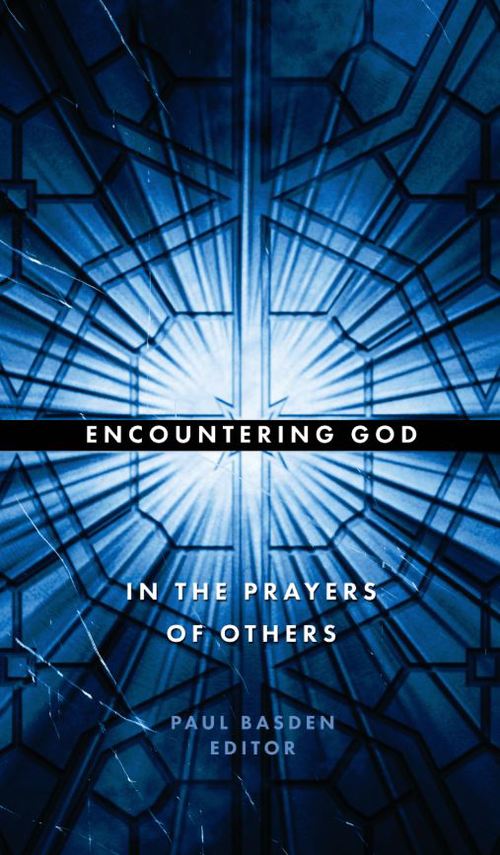
Our new book: Encountering God in the Prayers of Others

Encountering God in the Prayers of Others is
our latest collective effort. It springs from experience
in our spiritual lives of prayers
composed by others that have “spoken” to us.

The Trinity group is a self-named group of friends, all Ph.D. grads

CONTRIBUTORS Paul Basden, R. LaMon Brown, Brad Creed, Gary Furr, Fisher Humphreys, Dwight A. Moody, Richard Francis Wilson

in theology or closely related fields who have chosen to journey together theologically for 25 years. The group was initiated by our teacher-friend Fisher Humphreys.  It includes missionaries, pastors, college and seminary professors and a chaplaincy supervisor.

Through the years, we have created a space, meeting once or twice a year for multiple days, to have intellectual, spiritual and theological freedom to read, study, comment, question and debate any subject together that interested or troubled us. The glory of such freedom has enhanced all of our lives.

One of our founders, Philip, died six years ago this March. He was the first close friend some of us had lost, and he was in so many ways a force and center of our group. His loss was enormous, but we carried on. That experience, of walking with a friend to his grave, literally in my own case, was profound. And it mirrors what happens in the theological journey—it is always, inevitably, personal at the same time that we seek the loftiest and most universal of vantage points from which to do theology. Continue reading “Our new book: Encountering God in the Prayers of Others”

“The Man I Didn’t Kill” and Paying Attention

In 2008 I wrote a song called “The Man I Didn’t Kill.”  The story of the song is pretty simple in a way.  I get song ideas all the time just from observations of life.  I never mind a drive to the hospital or the million other tasks I have to do in my work as a minister.  It is an ocean of songwriting material, because it’s simply life experience.  I really admire the great songwriters who live in Nashville, sit in an office all day and crank out lyrics.  I’m not sure I’m that imaginative.

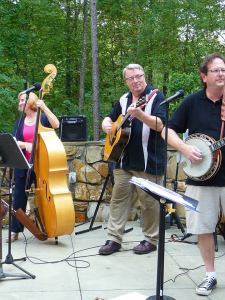
Gary Nancy Greg

My ideas come from life.  I walk through, listening to people in trouble, solving problems, managing a congregation, dealing with budgets, praying for the sick.  All along, though, the artist in my brain tries to pay attention.  I’m not looking for songs, but I’m paying attention for things that interest me. Kate Campbell talked a lot about being curious—noting things you care about and trying to understand why.

So songs, or at least ideas, pop up everywhere.  Back about 2008 or 2009, I wrote a song that ended up on my cd “Overload of Bad News Blues.”  It’s called, “The Man I Didn’t Kill.”  It came from a close call.  One day a pedestrian walked out in front of me without looking.  I was watching him, so I hit the breaks and, for the first time, he saw me.  Small bit of life. Continue reading ““The Man I Didn’t Kill” and Paying Attention”